Crypto casinos have become a normal part of online gambling, but they are still often misunderstood.
Some players see them as faster, more private, and more modern than ordinary online casinos. Others see them as risky, confusing, or too close to the unregulated side of the industry. Both views can be partly true.
A crypto casino is not automatically safer because it accepts Bitcoin. It is not automatically suspicious either. The important question is how the casino operates. Who owns it? Is it licensed? What coins does it accept? How are withdrawals handled? Are bonus terms clear? What happens if a transaction goes wrong?
Crypto changes the payment layer. It does not remove the usual casino risks.
That is the first thing to understand.
What Is a Crypto Casino?
A crypto casino is an online casino that allows players to deposit, withdraw, or play using cryptocurrency.
Some casinos are crypto-first. They mainly focus on Bitcoin, Ethereum, Litecoin, Dogecoin, Tether, or other digital assets. Others are ordinary online casinos that simply added crypto as one of several casino payment methods.
There are also hybrid casinos. These may let players deposit crypto but show the balance in euros, dollars, or another fiat currency. In that case, the crypto is mostly used as a funding method, while the gambling balance behaves more like a normal casino account.
The details matter. A player should know whether they are gambling directly in crypto or merely using crypto to fund a fiat account.
Crypto Payments Can Be Fast, But Not Magic
One reason players like crypto casinos is speed.
A crypto deposit can often arrive quickly, especially compared with some bank transfers. Withdrawals may also be faster if the casino processes them promptly. But the blockchain itself is only one part of the process.
A withdrawal still depends on the casino approving the payment.
That means a casino can still delay a withdrawal for account checks, bonus reviews, payment limits, security reviews, or manual processing. Crypto does not remove the need to check the withdrawal rules. It only changes how the money moves once the casino sends it.
If a casino advertises “instant withdrawals”, read that carefully. Does instant mean the withdrawal is processed instantly, or only that crypto transactions are fast after approval? Those are not the same thing.
Volatility Can Change the Real Value of a Deposit
Crypto prices move.
That can make casino play feel different from ordinary gambling with fiat currency. If a player deposits Bitcoin, the value of that Bitcoin may rise or fall while it sits in the casino account, depending on how the balance is held.
Some casinos convert the deposit into a fiat balance immediately. Others keep the balance in crypto. Some games may be priced directly in crypto units.
This matters because a player might think they lost or won a certain amount, only for the real-world value to change as the coin price moves. A win in crypto may be worth more later. It may also be worth less.
That does not make crypto casino play better or worse by itself. It simply adds another layer of risk.
With a normal casino, the gambling result is the main variable. With a crypto casino, the coin price may become a second variable.
Stablecoins Reduce Volatility, But Not All Risk
Stablecoins such as USDT or USDC are often used because they are designed to track the value of a fiat currency, usually the US dollar.
That can make deposits and withdrawals easier to understand. A player depositing 100 USDT has a clearer idea of the value than someone depositing a small fraction of Bitcoin.
But stablecoins do not remove all risk. Players still need to choose the correct network, check wallet addresses carefully, understand withdrawal fees, and make sure the casino actually supports the coin and chain they intend to use.
Sending crypto to the wrong address or wrong network can be difficult or impossible to reverse.
That is one of the biggest differences from card payments or e-wallets. With crypto, the player has more control, but also more responsibility.
Licensing Still Matters
A crypto casino should still be judged like any other online casino.
Licensing matters. Ownership matters. Terms matter. Complaint history matters. Payment reliability matters. Player protection matters.
The fact that a casino accepts Bitcoin does not prove that it is fair, safe, or well run. A poor operator can accept crypto just as easily as a good one.
Players should check:
- who operates the casino
- where it is licensed
- whether the licence is clearly displayed
- whether the casino accepts players from their country
- whether the terms explain crypto deposits and withdrawals
- whether account verification may still be required
- whether bonuses have special crypto rules
- whether there are withdrawal limits
The biggest mistake is treating the payment method as the safety check.
It is not.
The operator is the safety check.
“Anonymous” Does Not Always Mean No Verification
Crypto casinos are sometimes advertised as private or anonymous.
That can be misleading.
Some crypto casinos allow simple registration and fast deposits. Some may ask for less information at the beginning than a traditional casino. But many still reserve the right to request KYC verification before a withdrawal, especially if there are large payments, suspicious activity, regulatory requirements, duplicate account concerns, or bonus issues.
This can surprise players who believed crypto meant no identity checks at all.
Before depositing, players should read the verification rules. The key question is not only, “Can I deposit without documents?” The better question is, “Can the casino request documents before I withdraw?”
If the answer is yes, the player should know that in advance and protect the account email and document-upload route.
Bonuses Can Be Different at Crypto Casinos
Crypto casino bonuses may look generous.
Some offer large matched deposits, free spins, cashback, rakeback, VIP rewards, or reload offers. But the same basic rule applies: a bonus is only useful if the terms are reasonable.
Players should check the wagering requirements, maximum bet rules, game contribution rates, expiry times, withdrawal caps, excluded games, and whether the bonus applies differently to crypto deposits.
A crypto bonus can also become confusing if the bonus is calculated in fiat value but the balance is held in crypto. The player needs to understand what amount is actually being wagered and what rules apply.
This is where crypto casinos are no different from ordinary casinos. A big headline number is not enough.
The terms decide the value.
Watch the Network and Fees
Crypto payments are not just about the coin. They are also about the network.
For example, a casino may accept USDT on one network but not another. A player who sends funds through the wrong chain may lose access to the payment. Some casinos may help, but they may not be able to recover it.
Players should check:
- the exact coin
- the exact network
- the minimum deposit
- the minimum withdrawal
- casino-side fees
- blockchain network fees
- required confirmations
- whether the deposit address expires or changes
This is especially important for players who are used to card deposits. With a card payment, a mistake may be disputed or reversed in some situations. A broader comparison of casino payment methods helps put that finality in context. With crypto, mistakes are usually much harder to fix.
Provably Fair Games Are Useful, But Not a Complete Answer
Some crypto casinos offer “provably fair” games.
This means the player can verify that the result was generated fairly using cryptographic methods. It can be a useful transparency feature, especially for simple casino games built around random outcomes.
But provably fair does not answer every question.
It does not tell you whether the casino pays withdrawals quickly. It does not tell you whether the operator is licensed. It does not tell you whether support is reliable. It does not make bonus terms fair. It does not protect a player from gambling more than they can afford.
Provably fair can be a good sign, but it is not a complete safety check.
Crypto Casinos and Responsible Gambling
Crypto can make gambling feel less connected to real money.
That is a risk.
A small amount of Bitcoin or another coin may not feel like the same amount in euros, dollars, or pounds. If the player is already used to holding crypto as an investment, using it for gambling can blur the line between portfolio value and gambling money.
That is why a clear gambling budget matters even more.
Before depositing, a player should decide the real-world value they are willing to spend. That amount should be treated as entertainment money, not investment capital, not trading profit, and not money that needs to be won back.
Crypto does not change the basic rule: only gamble with money you can afford to lose.
When a Crypto Casino Is a Bad Sign
Some casino safety warning signs are especially important with crypto casinos.
Be careful if the casino hides ownership details, gives no clear licence information, pushes unrealistic bonuses, promises guaranteed wins, makes withdrawals vague, gives no explanation of verification rules, or advertises itself mainly as “anonymous” while avoiding basic transparency.
Also be careful with casinos promoted through fake celebrity ads, Telegram groups, influencer hype, or urgent “limited access” campaigns.
A serious crypto casino should not need mystery to look attractive.
It should be able to explain how it works.
The Sensible Way to Look at Crypto Casinos
Crypto casinos are not one single thing.
Some are serious gambling sites that use crypto as a payment option. Some are experimental but legitimate. Some are poorly run. Some are outright risky.
The player’s job is not to decide whether crypto casinos are good or bad as a category. The better approach is to judge each casino on practical evidence.
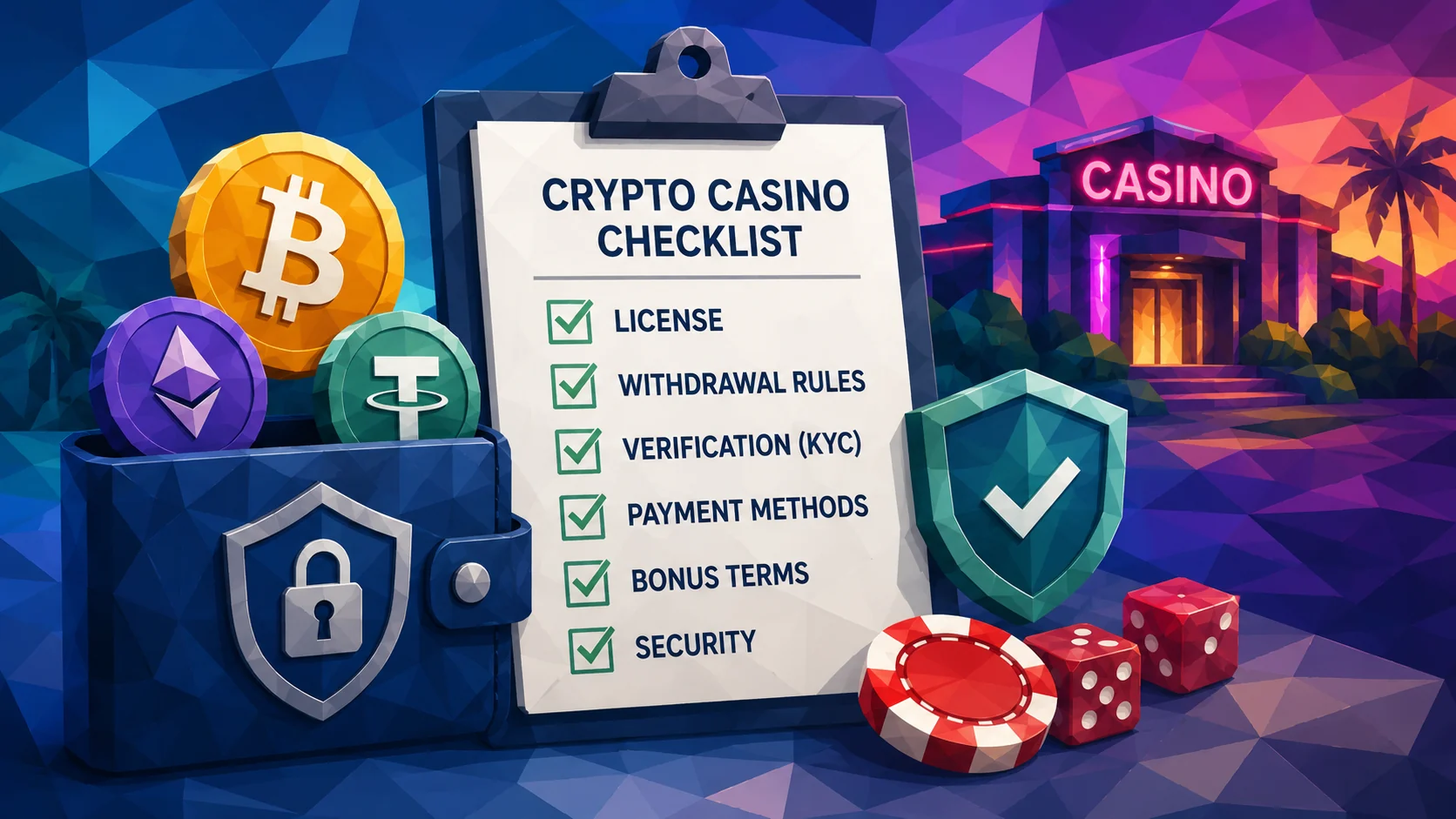
Check the licence. Check the operator. Check the withdrawal terms. Check the crypto payment rules. Check whether verification may be required. Check the bonus conditions. Check whether the coin value can change while you play.
Crypto can make online casino payments faster and more flexible. It can also make mistakes more expensive and harder to reverse.
That is the trade-off.
A crypto casino is only worth considering when the payment method, the operator, and the rules are all clear before you deposit.