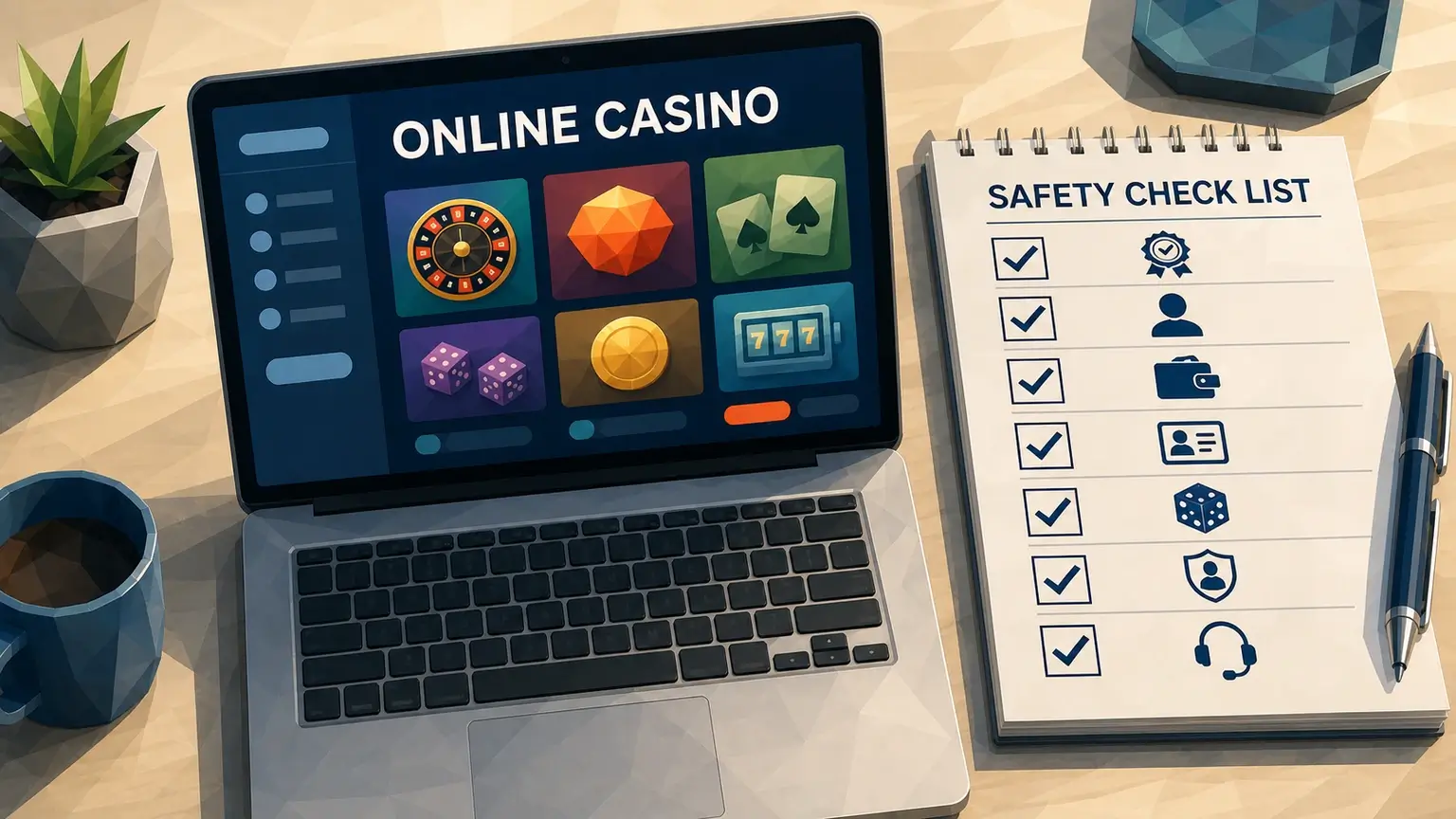
A professional-looking website does not prove that an online casino is legal, financially sound or likely to treat its customers fairly. Logos, familiar games and secure-looking payment pages can all appear on sites that are not authorised to accept players in a particular country.
The useful checks go further. A safer casino should be operated by an identifiable company, authorised for the player’s location, clear about withdrawals and verification, and subject to rules covering games, customer money, complaints and gambling harm. Even then, “safer” does not mean risk-free. A licence cannot remove the house edge, guarantee that a business will never fail or make gambling an appropriate choice for everyone.
Start With Your Location and the Type of Gambling
Whether online gambling is legal depends on jurisdiction. The important question is not simply whether a casino has a licence somewhere, but whether it is permitted to offer the relevant product to a person in the place where they are physically located.
Casino games, sports betting, poker, bingo and lotteries may be regulated differently. A business may be authorised for one product but not another, or licensed to serve one country while excluding players in the next. Some markets operate national registers, others use state, provincial or regional regulators, and some do not permit ordinary online casino play at all.
Before assessing bonuses or games, identify the authority responsible for online gambling where you live. If the legal position or responsible regulator cannot be established from an official government source, do not rely on the casino’s own interpretation.
Verify the Licence on the Regulator’s Register
A casino claiming to be licensed should state the operator’s legal name, regulator and licence or account number, normally in its footer and terms. Copying a regulator logo onto a website is easy, so treat the claim as information to verify rather than evidence in itself.
Use the regulator’s official website and public register or whitelist. Search for the legal company, the casino brand and the exact domain. Check that the authorisation is active, covers remote casino gambling and applies to players in your location. Where the register publishes regulatory actions, restrictions or suspensions, review those as well.
The domain check matters. A real licensed company can be impersonated, and a similarly named site may have no connection to it. The web address in the register should match the site you intend to use, including any country-specific version. If the company appears but the domain does not, ask the regulator or walk away rather than assuming the relationship is genuine.
Find the Company Behind the Brand
Casino brands are trading names. The company that controls accounts and customer money may have a less familiar name and may operate several sites.
Look for the full legal entity, registered address, company number where applicable, privacy contact and licence details. These should be consistent across the footer, terms, privacy notice and regulator register. Vague wording about being “internationally licensed,” a mailbox without a company name or conflicting operator details are serious warning signs.
Search the operator as well as the casino brand when reviewing its history. Repeated complaints about several sister casinos can reveal patterns that a brand-only search misses. Individual complaints still require context, but recurring reports of withheld balances, unexplained closures or changing terms deserve attention.
Understand What a Licence Does — and Does Not — Prove
A credible licence places the operator under rules administered by a regulator with authority over it. Depending on the jurisdiction, those rules may cover identity checks, game testing, customer funds, safer-gambling tools, complaints, advertising and anti-money-laundering controls.
It is not a promise that every withdrawal will be fast or every customer-service decision will be good. Regulators also differ in their requirements and in the practical help available to an individual player. The strength of the licence depends on whether it applies to the exact operator, domain, product and location involved.
Licensing is therefore the first filter, not the final verdict. A casino that passes it still needs the practical checks below.
Do Not Treat HTTPS, Apps or Famous Games as Proof
An encrypted connection is essential when personal and payment information is being transmitted, but the padlock in a browser only shows that the connection to that domain is encrypted. It does not establish who runs the casino, whether it is licensed or whether its withdrawal terms are fair.
The same caution applies to app stores, payment logos, sponsorships and familiar game providers. Illegal sites can look polished, appear in app listings and offer games associated with known suppliers. In 2025, the British regulator warned that games from licensed software suppliers had appeared on unlicensed websites. The presence of a recognised game is not a substitute for checking the operator.
Never install casino software from a link sent in an unsolicited message. Use the verified operator’s site and the official app listing connected to it, then confirm that the app publisher matches the legal business you checked.
Read the Withdrawal Rules Before Depositing
Deposits are designed to be easy. Withdrawal rules reveal much more about the relationship a casino expects to have with its customers.
Check the available withdrawal methods, minimum and maximum amounts, processing times, fees and any limits on how much can be withdrawn per day, week or month. Find out whether large wins may be paid in instalments, whether weekends count as processing days and whether a pending withdrawal can be reversed into the playable balance.
The terms should also explain when the operator may delay a payment, request further information, close an account or confiscate funds. Be wary of broad clauses that allow almost any decision without a clear reason, especially when important conditions are scattered across several pages or contradict the cashier.
Bonus terms can create separate withdrawal restrictions. If you do not want wagering requirements, maximum-stake rules or maximum-cashout conditions attached to the account, decline the bonus before playing. A large headline offer does not compensate for unclear access to your own money.
Check What Happens to Money Held in the Account
Money held by a gambling operator is not a bank deposit. Protection if the business becomes insolvent varies by jurisdiction and by the arrangements used by the operator.
Look for a clear statement explaining how customer balances are held and what protection, if any, applies if the company fails. Do not assume that keeping funds in a separate account guarantees repayment. In Great Britain, for example, operators must disclose a customer-funds protection rating, but the regulator explicitly warns that even segregated funds may not guarantee recovery.
Keeping an unnecessarily large balance at a casino increases exposure without improving the odds. If you choose to play, withdraw money you no longer intend to use rather than treating the casino account as storage.
Understand Verification Before It Becomes a Withdrawal Issue
Licensed operators carry out age, identity and anti-money-laundering checks. They may request identification, proof of address, evidence that a payment method belongs to you or information about the source of funds. These requests are not automatically suspicious, but the casino should explain why information is needed and provide a secure way to submit it.
Use accurate personal details from the start, and use payment methods held in your own name. Mismatched information, third-party payments or attempts to disguise a location can breach the terms and complicate access to the account.
Good casino account security also matters when documents are uploaded. Review the privacy notice before submitting them. It should identify the company responsible for the data, the purposes for which information is used, retention practices and relevant privacy rights. Do not send identity documents through social media, an unverified messaging account or an email address that does not match the operator’s official contact details.
Look for Game Rules, RTP Information and Testing
Depending on the jurisdiction, regulated online games are subject to technical standards and testing. For random-number games, this may include testing by an approved independent laboratory before release and ongoing monitoring after launch.
The casino should make game rules and return-to-player information available. RTP describes a long-run mathematical return, not what one person should expect from a session. A fair game can still have a substantial house edge, high volatility and long losing runs.
Do not confuse an unlucky result with evidence that a casino game is manipulated, but do not use the existence of an RNG claim as proof either. The useful evidence is the operator’s verified licence, the regulator’s technical requirements and the accountable testing framework behind the games.
Review the Player-Protection Tools
Safer-gambling tools should be visible before an account becomes difficult to manage. Depending on the market, these can include deposit, loss or wagering limits, session reminders, time-outs, self-exclusion, account-history statements and controls over marketing.
Check how quickly a reduction takes effect and what delay applies to an increase. A system that makes limits easy to raise but difficult to lower is not designed around customer control. Also establish whether self-exclusion applies only to one brand or across a wider licensed market.
Tools are useful, but they do not make continued gambling safe when someone is already losing control. If limits are repeatedly broken, gambling is being hidden or play is being used to recover losses, the appropriate response is to stop and seek support rather than search for a more flexible casino.
Find the Complaint and Dispute Route
A legitimate operator should publish a clear complaints procedure. It should explain how to submit a formal complaint, what information to include, how long the operator has to respond and where an unresolved dispute can be escalated.
In regulated markets, an independent dispute body may be available for eligible complaints. Confirm the named body through the regulator rather than trusting a logo on the casino site. A regulator may investigate compliance without deciding an individual payment dispute, so it is important to understand the correct route before a problem arises.
Save the terms that applied when you registered, bonus conditions, transaction records and important support conversations. Evidence is much easier to collect before access to an account is restricted.
Test Support With a Specific Question
Support should be able to answer a practical question consistently with the written terms. Before depositing, ask which documents may be required, whether your payment method supports withdrawals or which independent body handles unresolved disputes.
A quick response is not enough if it is vague or contradicts the website. Keep a copy of the exchange and judge whether the answer identifies the relevant policy. Pressure to deposit immediately, move the conversation to a private messaging account or ignore written terms is a reason to leave.
Warning Signs That Should Stop the Check
Some problems are serious enough that there is no reason to continue:
- the operator, licence or exact domain cannot be verified on the official register;
- company details conflict across the site or are missing entirely;
- the casino accepts a location that the regulator does not authorise it to serve;
- a representative recommends a VPN or false personal details;
- withdrawal rules are hidden, contradictory or can be changed after a win;
- support asks for payment to release a withdrawal;
- identity documents are requested through an unofficial channel;
- the site promises guaranteed winnings or presents gambling as income;
- self-exclusion and limit information is absent or deliberately difficult to use; or
- the casino relies on software, encryption, an app listing or a celebrity endorsement instead of verifiable licensing.
A Practical Check Before You Deposit
A complete process for choosing an online casino should let you answer these questions from independent or official information:
- Is this type of online gambling permitted where I am located?
- Which legal company operates the exact domain?
- Does the official regulator register show an active authorisation for it?
- What must happen before I can withdraw, and are there payment limits or fees?
- How are customer balances treated if the business fails?
- What verification may be required, and how are documents submitted?
- Which rules and testing standards apply to the games?
- Which limits, time-outs and self-exclusion tools are available?
- How can a complaint be escalated outside the casino?
If any answer remains vague, do not deposit while hoping it will become clearer later.
Safer Does Not Mean Risk-Free
A verified licence and transparent procedures reduce avoidable operator risk. They do not change the mathematics of casino games or guarantee a positive experience.
Only gamble if it is legal for you, you are old enough and the money is fully affordable to lose. Set the limit before opening the account, not after a loss. If gambling stops feeling like entertainment or starts affecting money needed elsewhere, stop playing and use independent support rather than another casino offer.