Slot machines are easy to play, but surprisingly easy to misunderstand.
A player presses spin. The reels move. Symbols land. Sometimes there is a win. Usually there is not. After enough spins, it can start to feel as if the game has a mood. Hot. Cold. Tight. Ready. Dead. About to pay.
That feeling is human. It is also not how online slots are designed to work.
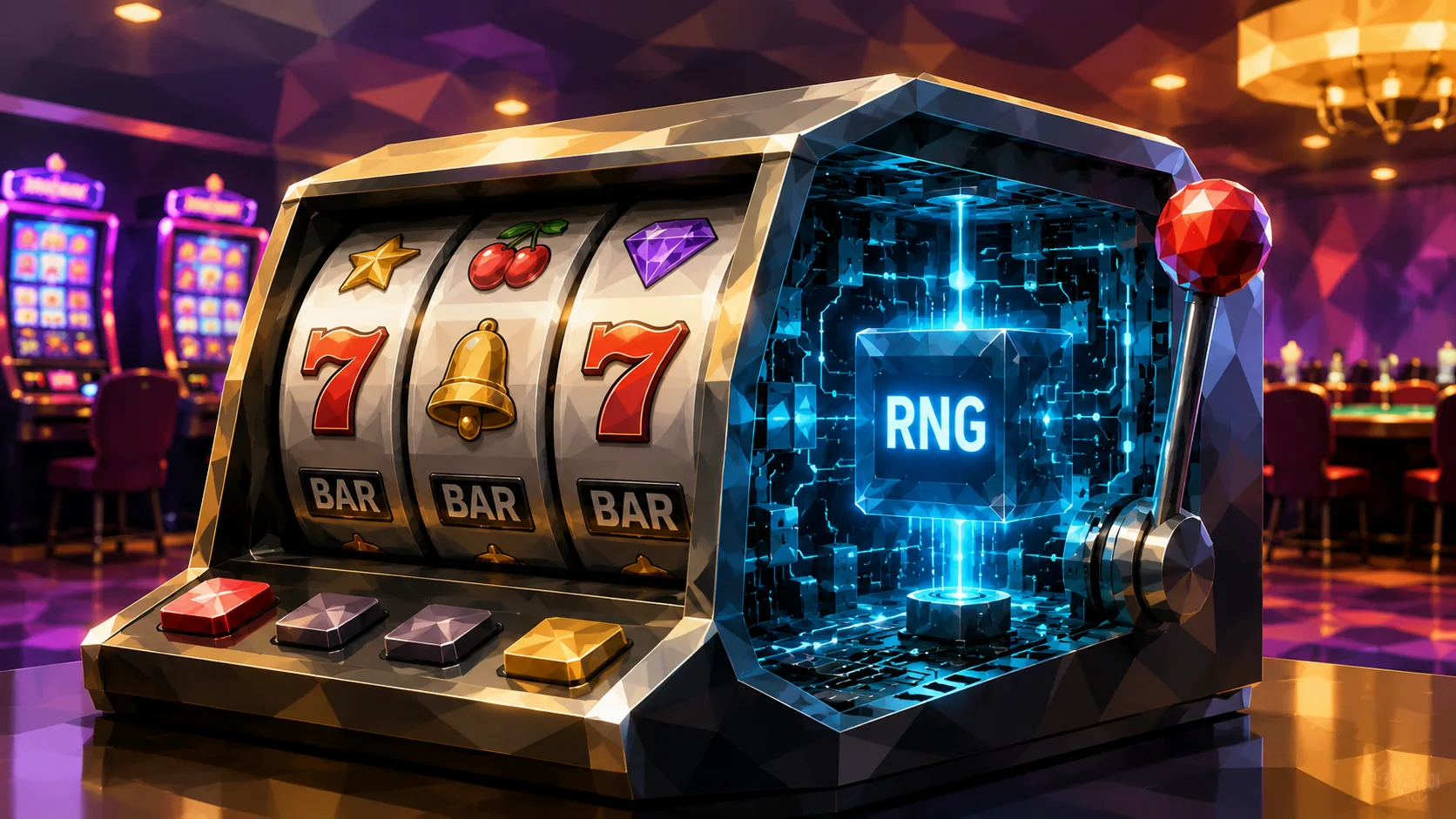
Modern online slot results are created by a random number generator, usually shortened to RNG. The RNG is the system that produces random outcomes behind the scenes. It does not remember whether you just won. It does not compensate you after a bad run. It does not punish you after a good one. It does not make a bonus round “due” because you have been waiting for it.
Each spin is its own event. Understanding that one idea can prevent a lot of bad gambling decisions.
What an RNG Is
An RNG is a system that generates random numbers.
In an online slot, those numbers are used to determine the result of a spin. The reels and symbols are what the player sees, but the important work happens before the reels stop on screen.
The game does not physically spin reels like an old mechanical machine. It uses software to select a result from the possible outcomes designed into the game.
The spinning animation is mainly visual. It creates suspense, but the result has already been determined by the game system.
That does not make the game fake. It simply means the online version works digitally rather than mechanically.
The Result Is Not Chosen by the Reel Animation
One common misunderstanding is that the reels are “almost” landing on a win and then miss.
A player sees two bonus symbols land, then the third symbol stops just above or below the payline. It feels close. It feels as if the game nearly paid.
But the animation is not a physical process that almost continued slightly further. It is a visual presentation of a result already selected by the RNG and the game’s mapping system.
Near misses can feel powerful because they look emotionally different from ordinary losses. A spin that lands nowhere near a bonus may be easy to dismiss. A spin that seems one symbol away can make the player feel that the bonus is close.
That feeling can encourage another spin.
The player should remember: close-looking results do not mean the next result is more likely to win.
Each Spin Is Independent
In a properly designed online slot, each spin is independent. That means the next spin does not depend on the previous spin.
If you won on the last spin, the next spin is not automatically worse. If you lost twenty times, the next spin is not automatically better. If the bonus has not appeared for a while, it is not guaranteed to arrive soon.
This is one of the most important ideas in slots.
Players often look for patterns because the human brain is good at finding stories. A long losing run feels like something must change. A few wins feel like the game is hot. A near miss feels like progress.
But random events can create streaks, clusters, and strange-looking patterns without those patterns meaning anything useful.
A slot can feel personal. It is not personal.
Does the RNG Decide the RTP?
The RNG creates random outcomes, but RTP is part of the game design.
RTP stands for return to player. It is a theoretical percentage showing how much the game is designed to return over a very large number of spins.
For example, a slot with 96% RTP is designed around returning €96 for every €100 wagered over the long term across huge amounts of play.
That does not mean you will get €96 back from a €100 session. You might win more. You might lose it quickly. Your session may look nothing like the long-term average.
The RNG handles the randomness. The game design, paytable, symbol weighting, bonus features, and payout structure shape the theoretical return.
RTP is useful for comparing games, but it is not a short-term promise.
RNG and Volatility Are Different Things
RNG and volatility are related to slot results, but they are not the same thing.
The RNG creates random outcomes. Volatility describes how the game tends to distribute wins.
A low-volatility slot may produce smaller wins more often. A high-volatility slot may produce fewer wins but offer the possibility of larger payouts.
Both types of games can use RNGs. Both can be fair. Both can have similar RTP. But they may feel completely different.
This is why a slot can seem brutal even if the RTP is not especially low. High volatility can create long dry stretches. The game may still be operating normally.
Volatility tells you what kind of ride to expect. RNG explains why you cannot predict the next spin.
Can a Slot Be Due to Pay?
No, not in the way many players imagine.
A slot is not due because it has been cold. A bonus is not due because it has not appeared. A jackpot is not due because many people have played without winning it.
Each spin is selected independently but this does not mean every slot is equally likely to pay a major win on every spin. Bonus rounds, jackpots, and big payouts may be rare by design. But the fact that you personally have not seen one for a while does not force the next spin to change.
The “due” idea is dangerous because it can make continued play feel logical.
The player thinks: I have already played this long, so stopping now would waste the progress. But there is no progress toward a guaranteed win.
There is only the next bet.
What About Progressive Jackpots?
Progressive jackpots can be slightly confusing because the jackpot prize grows over time.
A progressive jackpot may increase as players place qualifying bets. That can make the prize visibly larger, which may make the game more attractive.
But the growing prize does not mean a specific player is closer to winning it.
The jackpot can grow without becoming predictable. The exact trigger depends on the game design. Some jackpots may be random. Some may be linked to specific outcomes. Some may require a qualifying bet size.
Players should check the rules of the particular jackpot game.
The important point is that a larger jackpot is not the same thing as a personal advantage.
Can the Casino Change the Result?
In a properly regulated online casino, the operator should not be able to change individual spin results manually.
The game should run according to its certified software, RNG, paytable, and rules. Reputable casinos use games from licensed software providers, and those games may be tested by independent labs or reviewed under regulatory requirements.
That said, the player still needs to choose the casino carefully.
An RNG is only meaningful if the operator, game provider, and licensing environment are trustworthy. A slot claiming to be random on an unknown or unlicensed site is not enough. Players should still check the casino licence, provider reputation, terms, and whether the game appears to come from a legitimate supplier.
Fair game design and trustworthy operation are connected, but not identical.
RNG Testing and Fairness
Online casino games from reputable providers are typically tested to confirm that the RNG and game math behave as expected.
Testing may examine whether outcomes are random, whether the RTP matches the published design over very large samples, and whether the game functions according to its rules.
Players usually do not see this testing directly. Instead, they rely on regulated operators, recognised software providers, testing labs, and licensing bodies.
A casino should be able to show clear information about who operates it, where it is licensed, and which providers supply its games.
If a site hides those details, vague claims about “fair RNG” should not be enough.
A random game can still be offered by a bad operator. That is why fairness checks should include both the game and the casino.
RNG Does Not Mean Every Game Is Equally Good
An RNG can make a game random, but it does not make every game equally attractive.
A slot can be random and still have a lower RTP. It can be random and very high volatility. It can be random and have bonus features that rarely trigger. It can be random and still be unsuitable for your budget.
Fair does not mean generous. Random does not mean player-friendly.
A fair slot simply means the game outcome is produced according to the rules and probabilities of that game. The rules may still favor the house, because casino games are designed with a built-in edge.
This is why players should not ask only, “Is it random?”
They should also ask:
- What is the RTP?
- How volatile is it?
- What is the maximum bet?
- How fast does it play?
- Does it fit my budget?
- Do I understand the bonus features?
- Am I playing because I enjoy the game, or because I feel it must pay soon?
Why Slots Feel Like They Have Patterns
Slots are designed to be engaging.
Animations, sound effects, near misses, bonus teasers, expanding reels, multipliers, and win celebrations all make the game feel alive. That does not mean the game is reacting to the player personally.
Random outcomes can naturally create patterns that look meaningful.
A player may see several small wins in a row. Then nothing. Then two near misses. Then a feature. It feels like a rhythm. But random results can produce rhythm-like experiences without there being a rhythm to exploit.
This is where gambling can become emotionally tricky.
The more a player believes they can sense the machine’s pattern, the easier it becomes to keep playing after the original budget is gone.
Autoplay and Fast Spins
RNG-based games can move very quickly. Online slots do not need a dealer, a shuffled deck, or a physical wheel. Spins can happen in seconds. Some games also offer turbo mode, quick spin, or autoplay features depending on the market and operator.
Speed changes the risk.
A player may not be betting large amounts per spin, but many small spins can add up quickly. Fast play can also make losses feel less visible until the balance has already fallen.
Because each spin is independent, more spins do not create a route toward a guaranteed recovery. They simply create more exposure to the game’s house edge.
If you play slots, the pace matters almost as much as the stake.
RNG Myths Players Should Avoid
Some slot myths sound harmless, but they can lead to poor decisions.
One myth is that switching games after a loss improves your chances. It does not necessarily do that. The new game has its own rules, RTP, and volatility, but it does not know what happened in the previous game.
Another myth is that increasing the stake after many losses improves the chance of recovery. It only increases the amount at risk.
Another myth is that a slot that has just paid a big win is now cold. The next spin is still independent.
Another myth is that a slot that has not paid is ready. It is not. The common problem behind all these myths is the same: treating random events as if they are building toward a personal outcome.
What Players Can Control
Players cannot control the RNG. They cannot control when a bonus lands, when a jackpot triggers, or whether the next spin wins.
But they can control several important things. They can choose licensed casinos. They can choose reputable game providers. They can check RTP where available. They can understand volatility. They can set a deposit limit. They can choose a stake that fits their budget. They can avoid chasing losses. They can stop when the session is no longer enjoyable.
That is where real control exists. Not inside the spin. Around the spin.
The Sensible Way to Think About Slot RNGs
Random number generators are central to how online slots work.
They create independent outcomes, which means the game does not remember your last spin, owe you a win, or punish you for winning. The reels, sounds, and near misses may feel meaningful, but the result is produced by the game system according to its design.
That does not make slots safe. It makes them random.
RTP, volatility, stake size, game speed, and the casino’s reliability still matter. A fair RNG does not remove the house edge. It does not make a bonus round due. It does not turn a losing session into an investment.
The next spin is always just the next spin. Treat it that way.